
New and Next [19-12-14]
A Google Glass-like attachment, HTTPS and wearable security to stop RFID readers.
Turn any eyewear into a smart device
If you love the concept of Google Glass but not the look, Sony's new clip-on device may be for you. Debuting at the Consumer Electronics Show (CES) next year Sony's new 'Single-Lens Display Module' turns any bit of eyewear into a smart device. The module attaches to your glasses/sunglasses/goggles etc and has a high-res color microdisplay that brings up info on a mini screen to the side of your field of vision.

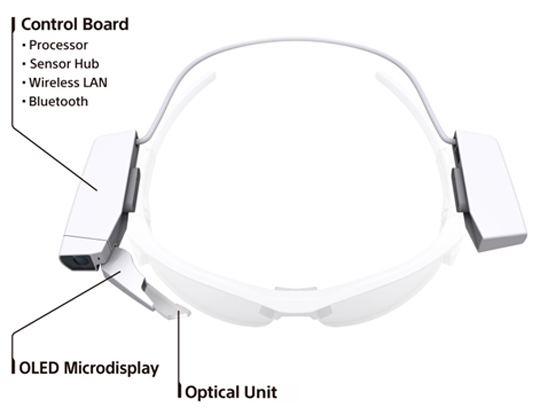
This display module possesses the potential to enrich users' lives in a variety of ways. By simply attaching it to a pair of fashionable glasses, goggles, sunglasses, or other type of eyewear, you can instantly gain access to visual information that adds a level of convenience to your everyday life. - Sony
Warning, your connection is not secure
We, the Chrome Security Team, propose that user agents (UAs) gradually change their UX to display non-secure origins as affirmatively non-secure. - Chromium Projects
Quick background: HTTPS essentially encrypts the data sent to and from a website so cyber-baddies can't intercept the information.
When Google announced HTTPS as a ranking signal, it was a sign of bigger things to come it would seem. Developers on the Chrome browser are looking at marking HTTP connections as non-secure next year. This means that when you get to a website that doesn't have a secure connection, Chrome will tell you so. The advantage, as the user, is that you'll immediately know if the information you enter to the site is secure -- always avoid entering personal details (especially payment details!) on a site that is non-secure. No more looking for https://, padlocks, green bars etc to indicate that the connection is secure, Chrome will simply tell you.
For website owners, it may not be as expensive or difficult as you think to have a secure certificate. There are a variety of options for adding a secure certificate to your site.
Wearable Security
Not wearable tech, wearable security. With radio frequency identification (RFID) becoming rather common (it's used for contactless payments on credit and debit cards, new passports and in medical devices) there's a wealth of personal information available to be digitally stolen. Betabrand have teamed up with Norton Antivirus to create clothing that will protect your information from would-be thieves. The clothing (currently jeans and a blazer) uses RFID-blocking fabric that shields your info from RFID readers. There are also RFID-blocking card sleeves and wallets on the market in case you carry your cards in your purse (wait for it, someone will come out with an RFID-blocking purse).
- Written by Maureen Young
- 19 December 2014